Enhancing Road Safety through UAV Integration in VANETs using NetSim
Vehicular Ad-Hoc Networks (VANETs) are becoming vital in modern transportation, allowing vehicles to communicate with each other and with the infrastructure. Despite their advancements, VANETs face challenges such as limited coverage and reliability, especially in remote areas.
To overcome these challenges, there's interest in using Unmanned Aerial Vehicles (UAVs) in VANETs. UAVs can fly above and help cover areas where ground-based communication struggles.
Integrating UAVs into VANETs could mean better coverage,faster communication, and new ways to manage traffic and emergencies. By using UAVs as helpful devices, VANETs could improve connectivity in challenging areas.
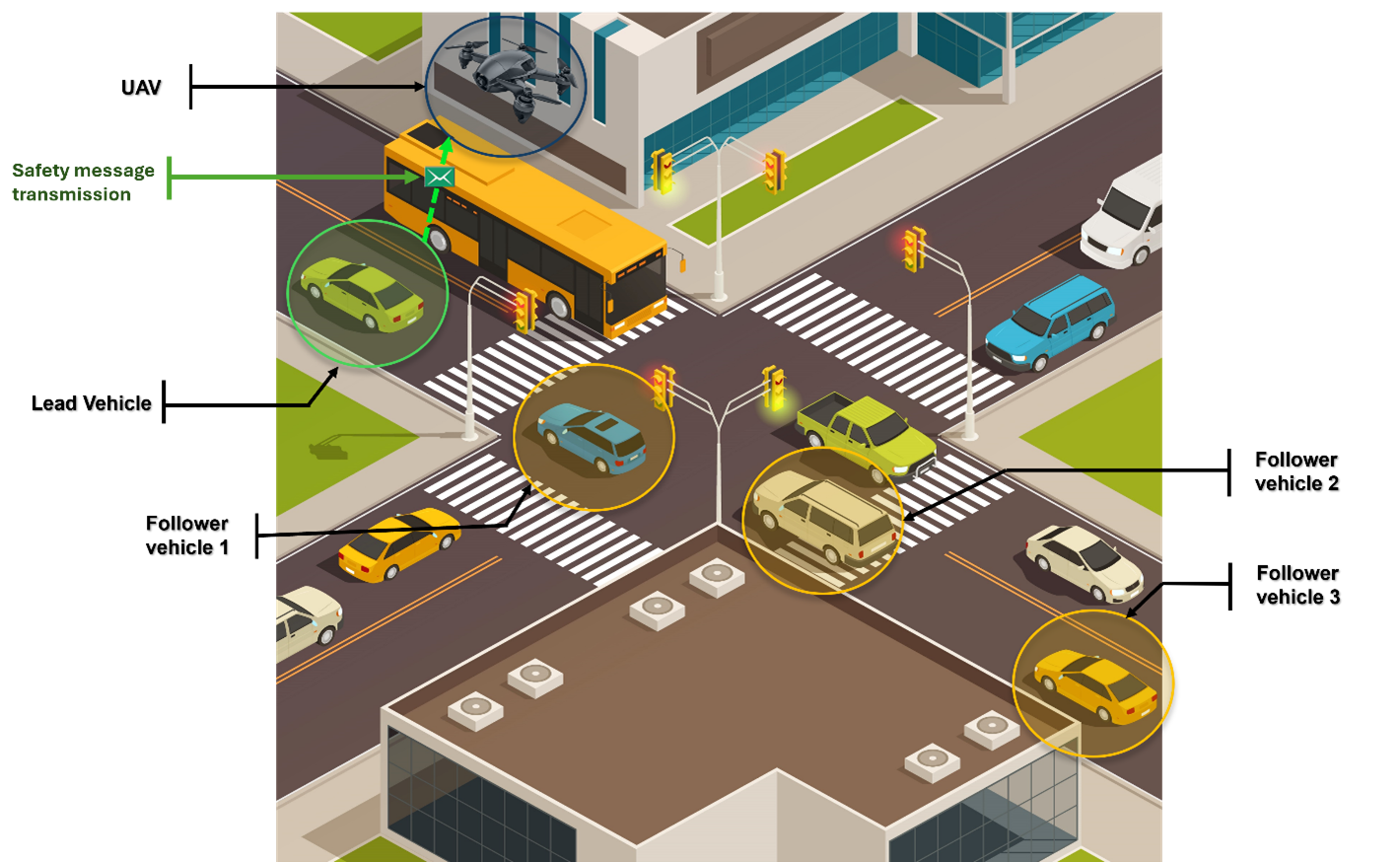
The article explains how using drones in VANETs could make things better. The primary objective is to showcase how drones can effectively monitor speed limits on highways and communicate with vehicles in real-time, alerting them when speed limits are exceeded. By doing so, we can potentially reduce accidents and enhance overall road safety.
Methodology
1. Road Network Setup:
- Utilizing SUMO (Simulation of Urban Mobility) to create a realistic road network environment.
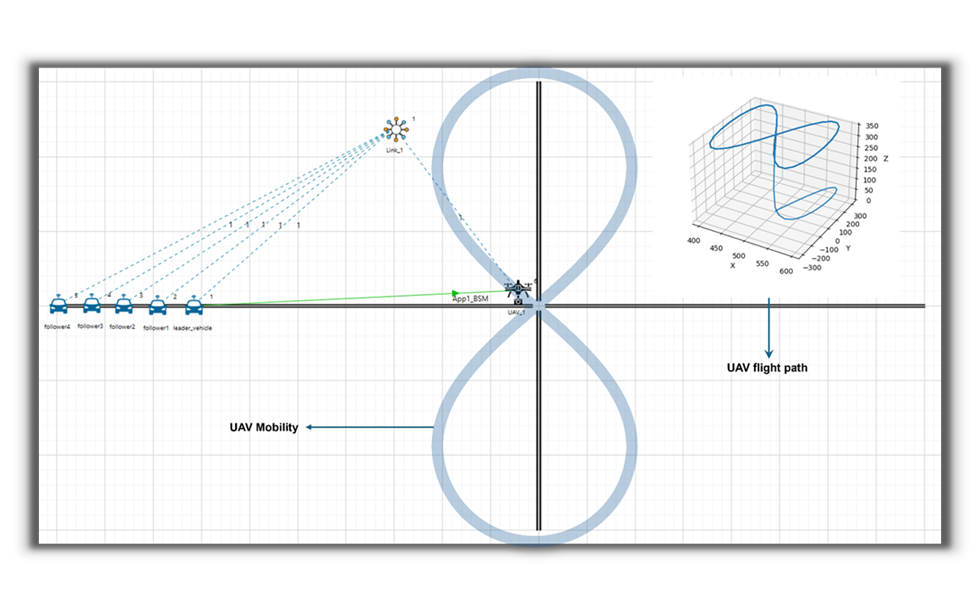
- Deployment of vehicles in the simulated road network, such that one vehicle acts as the leader followed by other vehicles.
- Importing this road architecture into NetSim for further simulation and analysis.
- Establishing continuous communication between the lead vehicle and the UAV (including speed, position, and other relevant data).
2. Speed Monitoring Mechanism:
- The implementation of a surveillance system (UAV) to monitor the velocity of the lead vehicle, ensuring that the lead vehicle stays within speed limits.
3. Alert System Activation:
- Configuring the UAV to detect when the speed of the leader vehicle exceeds the predefined speed limit.
- Sending warning signals or messages to all other vehicles in the network upon detection of over-speeding.
Modeling the Network in NetSim:
Create a road traffic simulation in SUMO.
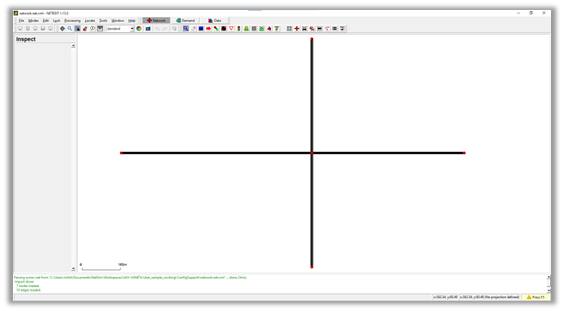
- Position the vehicles on the road, assigning one as the lead and the rest as followers.

- Import the generated sumo configuration into NetSim.
- Add a vehicle to the simulation, treating it as a UAV. Adjust its mobility to be file-based and include input for flight, specifying the z-coordinate.
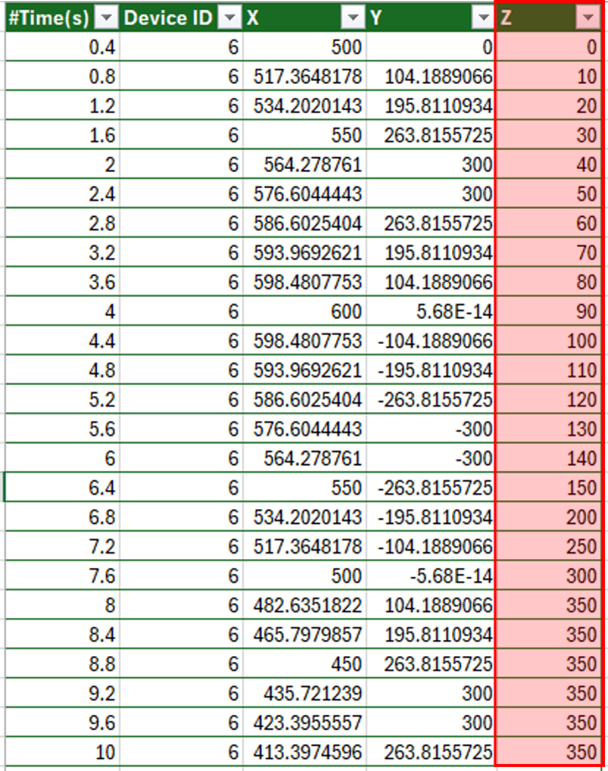
- Also configure the safety message application between Leader vehicle and UAV.
Results:
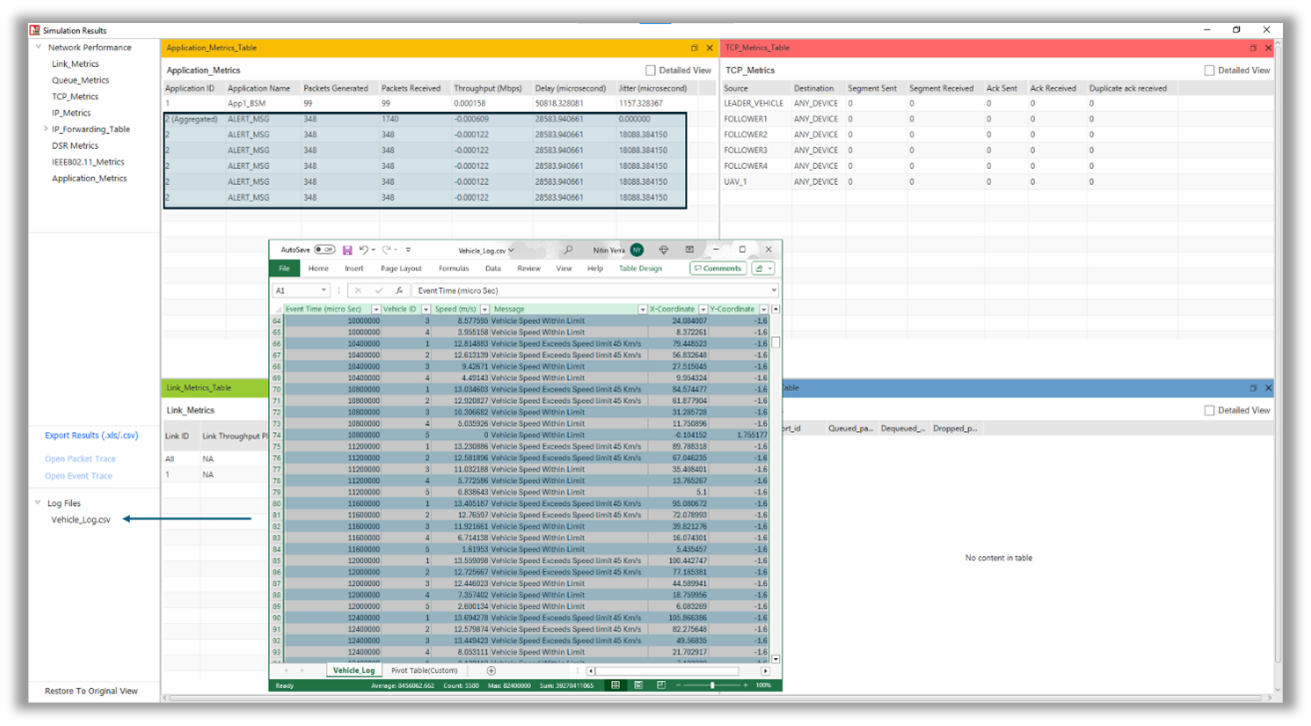
During the simulation, whenever the vehicle surpasses the designated speed limit, an alert is triggered. This alert, denoted as ALERT_MSG, is transmitted by the UAV once the lead vehicle exceeds the speed limit.
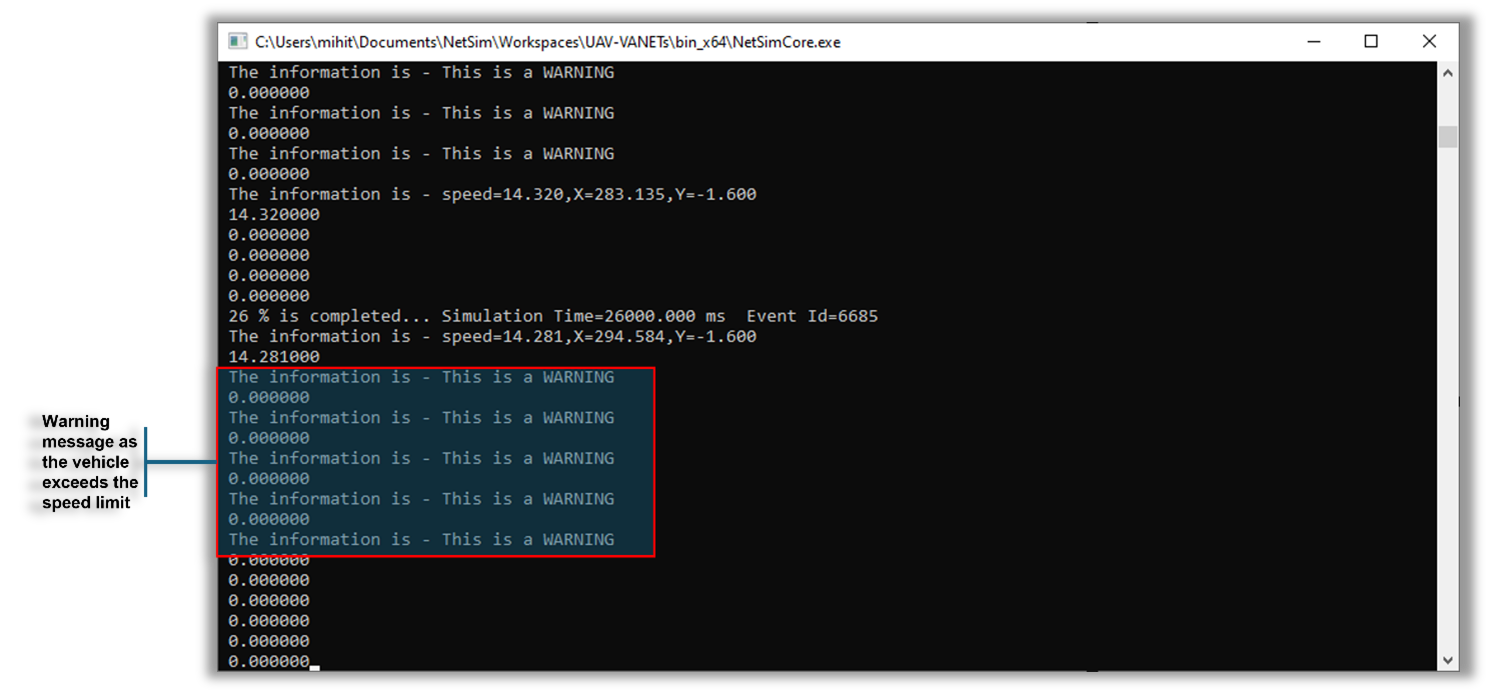 Subsequently, a log file named Vehicle_log.csv is generated, It contains detailed vehicle information like speed, x and y coordinates, and the alert message.